“Strong women don’t break companies—they reveal weak leadership.”

Take Susan. She was a plant manager for a manufacturing company, tasked with opening a new facility in another state. She was given “freedom to operate” and told to research the best location, workforce availability, supplier base, infrastructure, and accessibility—so she did exactly what a strong leader is supposed to do: she did her homework.
She gathered data. She analyzed market conditions. She looked at the long-term realities, not just the quarter. Then she put together a detailed proposal and budget for the management board—one that actually matched the scope of the mission she was given.
She didn’t pad numbers or inflate scope. Her research was rock-solid—financials, environmental impacts, operational realities all backed by data. Her proposal was the bare-minimum budget for a safe, sustainable plant. No wiggle room without compromising quality or the future.
Weeks later, the response came back: her budget was “excessive.” The company hadn’t put money aside for a serious investment and instead hoped to “make it work” with whatever could be scraped from operating income. Translation: they wanted a new plant without making a real investment.
Susan didn’t sugarcoat it. She immediately pointed out: you can’t expect a high-performing, future-proof facility if you refuse to fund it. Input equals output. She stood by her numbers, her assumptions, and her professional judgment. She expressed that she was not willing to take on the project unless it was funded properly to ensure success.
And for that? She lost her job. Not because she failed—but because her boss didn’t like what he heard.
The Risk Isn’t Strong Women. It’s Weak Leaders.
Here’s what gets glossed over: Susan did everything right.
She prepared. She researched. She presented clearly. She set realistic expectations.
She didn’t walk in with a list of demands or non-negotiables. She came with a solution grounded in financial, environmental, and operational reality. She was loyal to the mission, not to anyone’s ego.
The real flaws sat squarely on her boss’s side of the table:
- He wasn’t well-versed in his own company’s processes and products.
- He didn’t understand current or future market conditions.
- He was removed from reality, preferring wishful thinking over facts.
- Most importantly, his ego could not handle being contradicted—especially by a strong woman who wouldn’t bend the knee.
Susan is a hero in this story. She stayed true to the mission and the end result. She knew that underfunding the project would hurt everything and everyone tied to it: employees, the community, and the company’s future. She refused to rubber-stamp failure just to keep her paycheck safe.
That is strength. That is leadership.
Leadership Is a Duty to the Whole System
Here’s the part we don’t say out loud enough: your job as a leader is not to be loyal to the owner, the board, or the C-suite as individuals. Your job is to be loyal to the health of the organization.
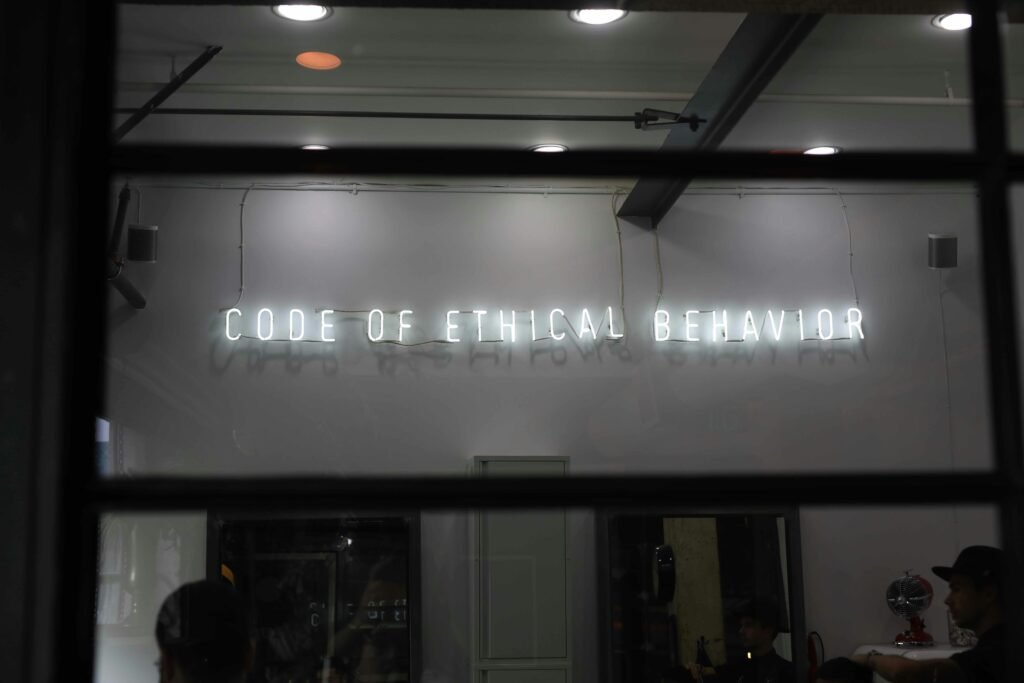
That means protecting the interests of all parties: owners and the board, yes—but also the factory workers, the processes, the environment, the safety, and the communities wrapped around your facilities. Real leaders don’t work for people; they work for a standard that’s been missing in a lot of corporations: fairness, equity, safety, sustainability, and profit that doesn’t come at everyone else’s expense.
So when a leader like Susan says, “This won’t work under these conditions,” she’s not being negative. She’s doing her job.
Bending the Truth vs. Bending the Knee
Here’s the uncomfortable truth: when managers are given a mission that impacts people’s lives, the company’s future, and their own reputations, they have a duty to stick to their guns.
Yes, there is give and take with owners and stakeholders. But when the conditions guarantee failure, it’s your responsibility to say so—clearly, transparently, and firmly. Sometimes that means risking your job. And most people won’t do it.
Plenty of managers will bend the knee. They’re in debt. They rely on their big incomes. They feel trapped. So they sign off on bad decisions and hope they won’t be there when the fallout hits.
To work like that, to live like that, is a nightmare. Ethics and character matter. If a company is willing to ignore facts, people, and logic, why should any leader with integrity stand behind it?
This is where strong women often get punished. Not because they’re wrong—but because they refuse to play along.
Why the Same Backbone Looks ‘Bold’ on Bill and ‘Difficult’ on Susan
Women are constantly labeled “the weaker sex,” but when it comes to standing up for what is right, many of them are the ones with the strongest backbone. They question. They push back. They protect people and outcomes, not just optics and egos.
That is conviction. That is power.
Now imagine the same scenario with a “Bill” instead of Susan.
Call it a hunch, call it lived experience, but there’s a good chance many companies would negotiate with Bill. They’d “talk it through,” “find a compromise,” maybe even adjust the budget. With Susan, it’s more convenient to paint her as “difficult,” “too negative,” “not aligned,” and quietly push her out.
And yes, sometimes that happens under a woman boss too. We like to talk about “women supporting women,” but the reality is that strong women are often seen as competition—by men and women—when they won’t shrink themselves to make others more comfortable.
It’s not always about the formal policy; it’s about who is perceived as credible, who is allowed to contradict, and who is punished when they do.
The Cost of Silencing Women Like Susan
When companies punish strong women for standing on facts and principles, several things happen:
- They lose their truth-tellers and critical thinkers.
- They teach the rest of the workforce that speaking up is dangerous.
- They send a clear message: ego matters more than reality, and compliance matters more than integrity.
And that’s how you end up with bad plants, bad launches, toxic cultures—and yes, over time, a workforce slowly getting burned out and broken because nobody was allowed to say, “This will fail.”
Strong women aren’t the problem. They’re the warning system.
They’re the ones telling you when something is going off the rails before it’s too late.
If You Say You Want Candor, Prove It
If you’re in leadership, you’re both Susan and Susan’s boss. You answer up, and you lead down. That’s exactly where the double standard sneaks in.

Ask yourself—honestly:
- When you look up the chain, do you expect your leaders to listen when you bring data and risk, but see it as “pushback” when someone below you does the same?
- Do you admire a “Susan” when she stands her ground with your boss, but label her “difficult” when she stands her ground with you?
- Do you really want people like Susan on your team—or do you secretly need them to stay just a little bit smaller than you?
Your job is not to guard your status. Your job is to guard the integrity of the system you’ve been trusted with. If your decisions consistently sacrifice fairness, safety, sustainability, and long-term health for short-term comfort, don’t pretend it’s “just business.” It’s a choice.
And if you’re a Susan—or could be:
Don’t let them convince you that your strength is a flaw. Your conviction, ethics, and willingness to tell the truth are not liabilities. They’re your value.
If a company fires you for that, it’s a verdict on them, not on you.
Final Thoughts
I want to reiterate that this article isn’t about normal give-and-take with owners or stakeholders. Strong women can be in the wrong, owners can be right, and in a typical scenario, the owner will have the final say. There were many business decisions I didn’t like in my past jobs that I executed wholeheartedly because the decisions were based on facts and reasoning that I could understand and did not hurt anyone in their execution.
It’s about the values leaders own and defend—especially when tasked to succeed with resources that don’t match reality and that can cause harm.
I’ve seen it over and over: managers at the highest levels—reporting straight to owners and stakeholders—tuck tail and go silent the second the owner gets upset or belligerent.
No spine. No standards. Just self-preservation.
When your voice doesn’t matter in the C-suite…(same as every woman on the factory floor fighting to be heard)…that’s your sign. Reevaluate who you’re really working for. Leaders serve values, not tantrums.
If you’re just nodding along to keep the corner office, you’re not leading—you’re employed.
🏭 Factory Floor Forward
Ready to build a better factory floor? Progress happens when leadership and workers trust each other enough to build it—together.