(First published on LinkedIn on February 2, 2026)
It’s Monday morning, shift change at a corrugated packaging plant in North Carolina.
Maria’s badge never lights green on the reader. No call, no text — which isn’t like her. She’s dependable to the inch: seven days a week, twelve-hour shifts, still smiling, still cooking meals for her four grandchildren. Maria came to the U.S. from El Salvador decades ago, built a life here, and is now a lawful permanent resident married to a U.S. citizen. She’s active in her church, her Hispanic community, and on this line.
The day-shift supervisor refreshes her timecard on the monitor, checks the parking lot, sends a text. Nothing.
Maria’s story is the story of countless plants across America — workers who hold entire lines steady through sheer reliability and quiet pride. Her coworkers notice quickly. “She okay?” someone whispers by the palletizer. No one knows.
Just across the state line, at a poultry processing plant in rural South Carolina, another supervisor stares at a missing timecard. James didn’t clock in either. No word, no message. He’s a local — grew up hunting on the same land the plant now leases. He’s known for two things: always showing up and never hiding his opinions. He’s been openly resentful of migrant coworkers who struggle with English. But for all his rough edges, James always showed up. Always.
By day’s end, both companies know — though no one knows how to say it out loud. Maria was detained by ICE agents after a traffic stop outside her neighborhood. James was shot and killed during an ICE altercation at a gas station — wrong place, wrong time, trying to pull a bystander to safety when things turned chaotic.
And now both plants — separated by geography and politics alike — have the same problem: an empty station on the floor and an unspoken question echoing in every break room.
What happens now?
When the outside world breaches the factory walls
We like to think work is its own world. Schedules, SOPs, and safety briefings form a clean border between inside and out. But it’s an illusion. The world — with all its volatility, fear, and power struggles — crosses that boundary every day with the people who swipe their badges and lace up their boots.
When life outside turns dangerous or unjust, workplaces feel it first through absence: a missing worker, a distracted team, a rumor that travels faster than HR can type an email. Supervisors are left to translate impossible news. Managers try to focus on production when half the team is crying in the breakroom. Human resources drafts statements that legal asks them to not post.
This is not politics. It’s humanity colliding with business.
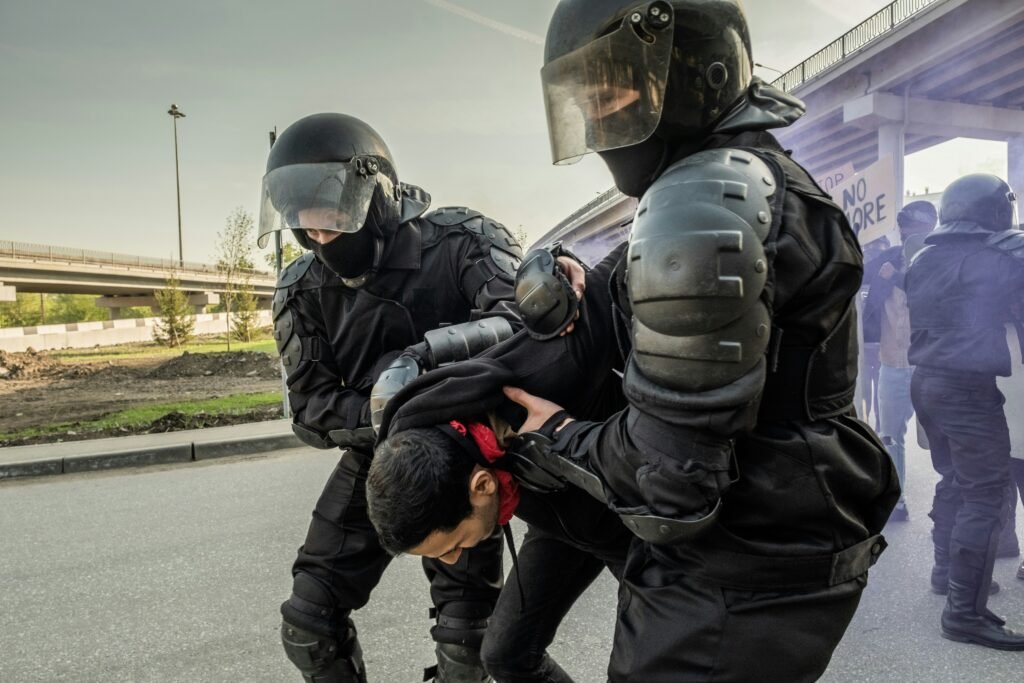
Preparing before the knock on the door
If you wait until a detention, a raid, or a shooting touches your workforce, you’re already too late.
Proactive protection starts long before anyone goes missing from the line.
That kind of preparation requires something many companies avoid: actually knowing your people, their realities, and where they may be vulnerable. Not to profile or police them, but to understand who might be at risk when enforcement ramps up in a region, when policies change, or when tensions rise in the community.
It also means being explicit about the kind of team you expect to be. You can’t just say “we’re a family” on a poster and then look away when some workers are targeted more than others. Leaders need to say clearly: we look out for one another here. If someone is followed, threatened, or afraid to come to work, that’s everyone’s concern — not just “their problem.” All for one and one for all is not a slogan; it’s a standard.
Here are concrete ways companies can prepare, not just respond:
- Create a “human risk” plan, not just a disaster plan. Treat immigration enforcement, community unrest, and targeted activity as risks to your workforce in the same way you treat storms, fires, or cyberattacks. Define triggers (announced sweeps, visible raids nearby, rising threat levels), escalation paths, and communication steps.
- Designate and train a rapid-response team. Identify a small cross-functional group (HR, legal, operations, EHS) that knows exactly what to do if enforcement shows up at your door, if a worker is detained offsite, or if your people are afraid to come to work. Train them on what warrants you must honor, what you are not required to do, and how to protect both workers and the company from overreach.
- Build relationships with trusted organizations before you need them. Partner with local immigrant rights groups, legal aid organizations, worker centers, and community leaders who can provide “know your rights” materials, training, and referrals. Have a vetted list of lawyers and hotlines ready, in multiple languages, and make it clear that using them will not cost someone their job.
- Set expectations for solidarity. Talk with your teams about what it means to be a crew: watching each other’s backs, flagging concerns early, and refusing to treat a coworker’s fear as a joke or an inconvenience. Coach supervisors to shut down dehumanizing comments and replace them with: “On this floor, we protect one another. That’s part of the job.”
- Offer safer alternatives when enforcement activity spikes. When there are announcements, rumors, or visible activity about ICE presence on certain routes or in certain neighborhoods, explore practical mitigations: temporary changes to start/end times, company-organized carpools or parking at safer hubs, transportation stipends, or remote HR appointments instead of forcing people to cross known checkpoints.
- Protect information and uphold the law — without going beyond it. Train managers and front-desk staff not to volunteer access or information beyond what the law requires. They should not be improvising in a panic when an agent shows up; they should know the script and the limits.
- Normalize conversations about safety and rights. Host optional briefings or toolbox talks where workers hear about their workplace rights, what happens if immigration enforcement shows up, and what the company’s commitments are. Make space for questions without demanding disclosure of anyone’s status and emphasize confidentiality and non-retaliation.
Proactivity is not about picking sides in a culture war. It’s about refusing to outsource the safety and dignity of your workforce to chance. You can’t control what the government does, but you can absolutely control whether your workers feel seen, informed, and supported when enforcement targets communities that look like them, speak like them, or travel the roads they use.

The real leadership test
It’s easy to support your workforce when all you need is a pizza party or a slogan. It’s much harder when tragedy walks through the door.
Leadership in manufacturing is tested not by output, but by how you respond when your workers’ stability collapses — when headlines shake your team’s sense of safety and you have to decide whether to speak or stay silent.
Most companies default to neutrality: “We can’t take a stance,” “This isn’t our role,” “We’ll wait for the facts.” But the workforce hears that silence differently. To them, it says: You’re on your own.
What companies do in the moment
Even with preparation, the day may come when someone like Maria doesn’t show up for work. Or when news breaks about someone like James, and people on the floor are grieving and angry — even if they didn’t agree with him, even if they didn’t like him.
In that moment, what you do becomes part of your company’s story:
- Acknowledge humanity first. When something tragic or unjust affects your team, say it. Silence does not preserve professionalism; it signals detachment. Even a brief, compassionate statement — “We care, we’re here, we’re watching this unfold with concern” — can anchor your people in uncertainty.
- Communicate clearly and consistently. Let workers know what you can share and what you can’t, what support is available, and how you’re monitoring the situation. Mixed messages deepen fear and fuel rumors.
- Make room for grief and fear. Some people will need to step away from the line, call family, or just breathe. Where possible, allow brief pauses, on-site support, or flexible scheduling in the immediate aftermath.
- Offer tangible help. Access to employee assistance programs, mental health support, referrals to legal resources, or help navigating community services speaks louder than any statement.
- Back your managers with guidance, not just “good luck.” Supervisors should not have to improvise in front of a scared crew. Give them talking points, boundaries, and options so they can respond with confidence and care.
- Document, learn, and improve. After the crisis moment, debrief: What worked, what didn’t, what did employees actually need, and how will you build that into your next version of the plan?
What it signals to your people

When tragedy hits one worker and a company responds with compassion, every other employee sees it.
They measure leadership by how much courage it takes to do the right thing.
The strength of a workforce isn’t built just on pay rates or efficiency — it’s built on trust that the company values people as people. Maria’s coworkers still check the breakroom door every morning. James’s team still sets up the line the way he used to. What they remember most isn’t just what happened — it’s how leadership responded in the days that followed.
Why this matters so much: No workforce, no productivity. No solidarity, no culture. No loyalty, no retention. When companies stay silent or compliant in the face of mayhem — raids, violence, fear — they send a clear message: profits over people. Workers notice. They leave. They whisper to the next employer, “They didn’t have our backs.” The cost isn’t just one empty station on the line — it’s the slow erosion of everything that makes a factory actually work.
Factories will always be measured by what they produce. But workplaces will be remembered by how they protect.
Final call: Due process. Pathways. Principles.
While the above fictional characters are not undocumented workers, I must point out two realities that affect all of us the same, no matter if someone is legal or not:
1. Legal pathways from Central/South America are nearly nonexistent. Wait times stretch decades. Requirements demand wealth, family ties, or employers most workers will never have. For many families fleeing danger and poverty, there simply is no line to get into — as No Option But North lays bare (great book by Kelsey Freeman). This isn’t an excuse. It’s a fact that explains why so many good workers end up undocumented. Educate yourself before passing judgment on others.
2. Everyone deserves due process — period. Being undocumented is a civil matter, not a criminal one. Even government must follow its own rules: warrants, hearings, rights to counsel. We cannot excuse bad behavior or overreach covered under a blanket of lies and fear. When agencies skip steps or target indiscriminately, we all must stand up — not just for “illegals,” but for the principle that protects every single one of us.
When the world walks into work, your people look to you. The future of workforce culture may depend less on automation or AI — and more on whether tomorrow’s leaders are willing to protect the people who keep everything running, even when it’s inconvenient, uncomfortable, or called “too political.”
🏭 Factory Floor Forward
Ready to build a better factory floor? Progress happens when leadership and workers trust each other enough to build it—together.