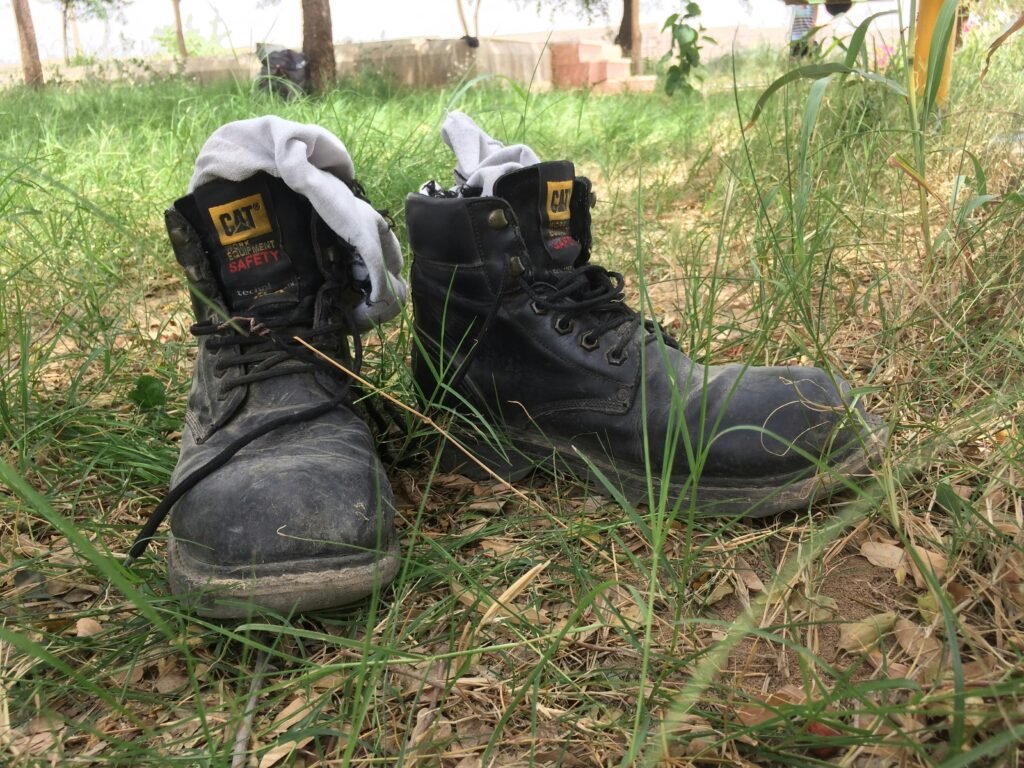
Most factory leaders obsess over output, headcount, and the next crisis. Very few obsess over something far more dangerous when it’s missing: being grounded. Not grounded in the buzzword sense — not a wellness poster or a mindfulness app — but genuinely, functionally rooted in who you are while the world around you is on fire. That kind of grounded.
And on the manufacturing floor, where the pressure is relentless and the expectations never sleep, it may be the most critical leadership skill you’re not developing.
What Grounding Actually Means
Before we talk about leading from a grounded place, it’s worth slowing down and understanding what grounding even is — because most people only notice it when it’s gone.
Grounding, at its core, is the felt sense of being present in your own life. It’s the difference between reacting and responding. Between being swept up in the current and knowing where your feet are. Psychologists describe it as the ability to stay regulated — emotionally, mentally, and physically — even when external conditions are destabilizing. It’s not the absence of stress. It’s stability in the presence of it.

People ground themselves in different ways, and most of them are more physical than we expect. Spending time in nature — literally walking barefoot on grass, sitting with your back against a tree, stepping outside into the air — has measurable effects on the nervous system. Exercise, stillness, breathwork, prayer, journaling, meaningful conversation: all of these pull us back into our own bodies and out of our heads. Even the act of slowing down and naming what you’re feeling — rather than bulldozing past it — is a form of grounding that most high performers have never been taught.
The common thread? Grounding requires you to stop performing and start feeling. And in a culture that rewards speed, toughness, and relentless forward motion, that’s a countercultural act.
The Grounded Leader on the Factory Floor
In a manufacturing environment, the ungrounded leader is easy to spot. They hide behind numbers, policies, and titles because that’s safer than facing real emotions and real people. They escalate when they should pause. They mistake busyness for leadership. They make decisions from anxiety rather than from clarity — and everyone downstream feels it, even if no one says it out loud.
The grounded leader does the opposite. They walk the line. They ask uncomfortable questions and actually hear the answers. They are not always the most popular person in the room, and they are not always “nice” — but they are real. And that realness builds trust faster than any all-hands speech or open-door policy ever will. There’s a stability to them that people feel before they can even name it.
So what does grounded leadership look like in practice — on a real floor, with real pressure, real people, and real targets?
- Practice micro presence. Spend one minute with a line worker with zero agenda. No problem to solve. No message to deliver. Just stop, look them in the eye, and listen. That’s it. One minute of genuine presence does more for trust than an hour of scheduled engagement.
- Observe before you fix. Watch how people work, struggle, and adapt. Let what you see actually land before you jump into solution mode. The reflex to immediately fix is often ego wearing a helpful disguise.
- Make your feedback specific. Not “good job” — but “I watched how you handled that changeover under pressure this morning. That was sharp thinking. That matters.” Specificity signals that you were actually paying attention, and that changes everything.
- Build in a pause. When things escalate — and they will — take one intentional breath before you respond. That single breath is often the difference between leading and lashing out. Between a moment that builds your credibility and one that costs it.
- Audit what you’re feeding yourself. Reduce the noise that destabilizes you — unnecessary drama, performative meetings, the endless scroll. Replace it with what steadies you: time with a coach, a trusted peer, reflection, reading, silence. Grounded leaders are intentional about what they let in.
You can't lead humans effectively from 30,000 feet forever. At some point, you have to land. You have to feel the floor under your feet and remember you're dealing with people — not just metrics, not just uptime, not just yield rates.
For Women on the Floor, Grounding Is a Different Fight

Everything above applies to every leader. But for women in manufacturing, getting grounded — and staying that way — comes with an extra layer of noise that doesn’t show up in the leadership books.
Because the ask is contradictory from day one. Be tough enough to command respect on the floor, but not so tough that you’re “difficult.” Be warm enough to connect with your team, but not so warm that you’re not taken seriously. Have a voice in the room, but read it carefully — too quiet and you’re invisible, too direct and you’re aggressive. The goalposts move constantly, and nobody hands you a map.
That constant calibration is exhausting in a way that quietly erodes grounding. When you spend that much energy managing perception — figuring out how to be heard, how to be seen as competent without being labeled intimidating, how to advocate for yourself without it being held against you — there’s less energy left to stay connected to who you actually are. The noise is relentless. And unlike the noise of a difficult quarter or a tough production week, this noise doesn’t go away when the problem gets solved. It’s structural. It’s chronic. And most women on the floor carry it without ever naming it out loud.
Proving yourself in an environment that wasn’t designed for you takes a toll that doesn’t appear on any performance review. And yet — the women who figure out how to stay grounded in that environment are often the most powerful leaders in the building. Not despite the noise, but because they’ve had to develop a deeper, more deliberate relationship with their own identity just to survive it.
That’s not a small thing. That’s a superpower built under pressure.
If you’re a woman leading in manufacturing: the work of grounding yourself is not a luxury or a self-care indulgence. It is a professional necessity — and a radical act in a system that profits from you staying off-balance. Find the people who see you clearly. Protect that clarity fiercely. And know that your steadiness, hard-won as it is, is exactly what the floor needs more of.
If you lead alongside women or above them: notice the extra weight. Don’t add to it. And when you see a grounded woman leading well — say so, specifically, out loud.
The People Who Ground Us
Here’s the part that doesn’t get talked about enough: even the most grounded leader cannot stay that way alone. Grounding is not just a personal practice. It’s relational.
I was reminded of this recently on a trip overseas. I stayed with a friend I’ve only known for about a year — but our conversations go deep fast: honest, direct, sometimes uncomfortable, and somehow still energizing. She knows who she is and where she’s going. There’s a quiet presence to her that pulls people in, and she’s almost entirely unaware of it — which, if you think about it, makes it even more powerful. Being around her, I felt more like myself. Less like the performing, hustling, optimized version the world keeps rewarding. More like the person I actually am underneath all of that.
That’s what a grounding person does to you. And if you have even two or three of them in your life, you are fortunate in a way that doesn’t show up on any performance review.
There are a handful of people in most leaders’ lives — usually a very small handful — who have this rare ability to bring you back to yourself. Not by telling you what to do. Not by solving the problem. Not by flattering you back to confidence. But by something quieter and more powerful than any of that.
Being around them feels like the noise finally stops. Like you can exhale. Like you've been performing for an audience you didn't even realize was there — and suddenly, you don't have to anymore. They don't need you to be the title. They don't need you to be impressive. They just see you — the actual you underneath the role — and that reflection reminds you that person is still there.
And here’s what makes them truly rare: they often see that person before you do. When you’ve drifted, when you’re operating from a place of fear or ego or exhaustion and you can’t even feel it anymore — they can. They’re exceptional readers of people. They catch the drift before you’ve named it. They notice the gap between who you’re being and who you actually are, and they hold that space for you without drama or judgment. That quality — the ability to see someone clearly and reflect it back to them — is one of the most underrated gifts one human being can offer another.
What makes this so significant isn’t just the relief of it. It’s what happens after.
You leave those conversations not with a solution, but with a compass. You're not fixed — you're found.

They bring you back to your mission, back to your values, back to the version of yourself that chose this work for a reason. They confirm, without saying it outright, that you have what it takes to keep going. That you are capable. That the doubts, while real, are not the truth about you.
That is a different kind of support than most of us get — or give.
How to Recognize Them
Grounding people share a few patterns worth learning to identify:
- They read people with uncommon accuracy. They pick up on what’s beneath the surface — your tone, your energy, the gap between your words and your posture. They notice when something is off before you’ve said a word, and sometimes before you’ve even admitted it to yourself. This isn’t nosiness. It’s a rare depth of human attunement.
- They are honest enough to call you out — not cruelly, but directly. When you’re drifting from your values or telling yourself a story that isn’t true, they say so. They don’t let you stay comfortable in your own blind spots.
- They have a strong sense of their own identity. They know who they are, what they believe, and where they’re headed. That groundedness in themselves is part of what makes them grounding to others.
- They are vision-driven and forward-moving. Grounded people tend to be energized by purpose, not by chaos or drama. They have a plan. They’re building something. Their optimism isn’t naive — it’s earned.
- They are humble enough not to weaponize your vulnerability. What you share with them stays safe. They’re not storing information about your weak moments to use later. That safety is rare and should be treated as such.
- Their energy is consistent. You don’t have to guess which version of them you’re getting. That consistency is exactly what makes them magnetic, especially to people who feel completely unmoored.
These are not the people who flatter you. They’re the ones who steady you — and the difference between the two matters enormously, especially when things are hard.
Protecting Your Grounded Self
Here’s the honest part — the part that usually gets buried at the end of leadership articles as an afterthought.
If you are a grounded person, you are a resource. People feel it. They are drawn to your clarity, your consistency, your ability to remain calm while the building is shaking. On a manufacturing floor, this means you can become the emotional power plant for an entire organization. People line up — consciously or not — to plug into your stability. And if you’re not careful, they will drain you completely.
This is not a theoretical risk. It is a predictable outcome of being the grounded one in an ungrounded system.
Burnout in grounded leaders rarely looks like dramatic collapse. It looks like slow erosion. The conversations start to feel heavier. The things that used to energize you stop working. You find yourself giving the same emotional support in loop, without replenishment. You’re still showing up — but there’s less of you in the room than there used to be.

Protection is not selfishness. It is sustainability.
- Identify the two or three people who truly ground you. Not the ones who need you, or admire you, or come to you with problems — but the ones who restore you. The ones who hand you back to yourself.
- Tell them explicitly. Say it out loud. These relationships are critical infrastructure. Treat them that way.
- Set limits on how much you give without replenishing. Being the calm in the chaos is a legitimate leadership function. Being the dumping ground for every unresolved issue in the building is not.
- Schedule what restores you — and protect it. Whether that’s a coaching relationship, a morning routine, time in nature, or dinner with someone who reminds you of who you are — put it in the calendar and defend it the way you would any other operational priority.
Grounded leadership is one of the most powerful things you can bring to a manufacturing environment. It’s also one of the most demanding. The leaders who sustain it over the long haul are not the ones who give endlessly — they’re the ones who refuel deliberately.
Find your people. Keep your feet on the ground — literally and figuratively. And lead from there.
🏭 Factory Floor Forward
Ready to build a better factory floor? Progress happens when leadership and workers trust each other enough to build it—together.