The Floor
At an electronics plant I worked in, the people who built the product were women. The people who managed the people who built the product were men. Every line manager, and everyone above them.
The crew was mostly immigrant women, and they were the best operating system that plant ever had. They shared lunches, dreams and the bad news. Help arrived before anyone asked for it. They volunteered for extra hours because the pay was thin and the bills were real. Their workstations were spotless.
Most had no degree. They didn’t need one to know what the line needed, and they made do with whatever they were given, which was never much.
They also knew something nobody had to announce. In that building, the career ladder for a woman on the line was a straight, flat road. Women built the product. Men held the authority. The pattern never changed.
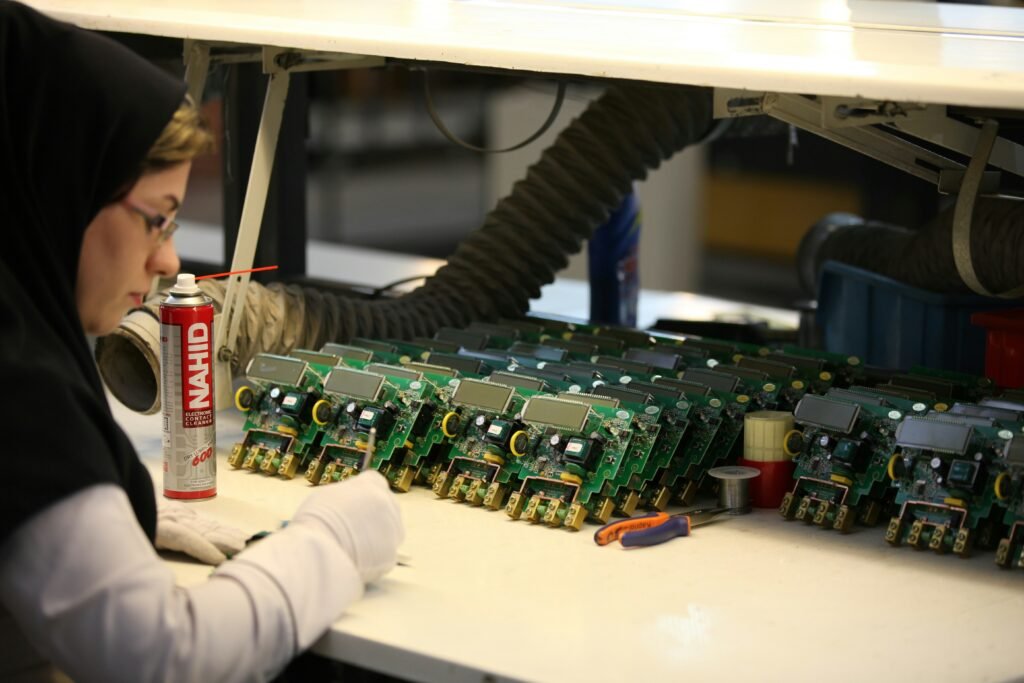
Here’s what makes it worth your time as a leader: nobody blocked these women with a rule. There was no policy to point to. The wall was built out of assignments.
The Assignment
Where promotions actually get decided
“You’re good at this stuff” is the most (backhanded) expensive compliment in manufacturing.
It sounds like praise. It works like a parking ticket. Good with detail? Inspection. Good with people? Train the new hires, on top of your own rate. Careful, organized, reliable? Packing, paperwork, the audit binder, the 5S walk.
Every one of those jobs is real work. On that floor, though, they weren’t treated as preparation for setup tech, cell lead or supervisor.
Here’s how it plays out. When a lead job opens, the short list is whoever has already run a changeover or restarted a down line. If nobody on your line was ever shown how, nobody makes the list. So the job gets posted outside, and it usually goes to a man. The crew that knows the work cold doesn’t lose on ability. It loses on reps nobody gave them. Promotions don’t start with a promotion. They start with who got cross-trained.
Behind those missing reps sits an assumption nobody says out loud: that women aren’t as technical as men. It’s wrong. The women on that line knew what the production needed better than anyone managing it. But the assumption never gets tested, because testing it takes a supervisor’s time, and on that floor no supervisor spent it teaching a woman a changeover. On a mixed floor, ask whether the same pattern shows up: who gets shown the changeover, and who gets asked to keep production moving?
Nobody has to scheme for this to happen, which is why it survives. A supervisor with a short crew and a hot order puts the dependable person where dependability is needed. The dependable person then never moves. The better you are at the job you got parked in, the less you can be spared to learn the next one.
So your best operator is still at the same station, three years in, and everyone agrees she’s irreplaceable. They’re right. That’s the problem.
And notice what the problem actually is. It isn’t that she stayed at one station.
It’s that she never had a meaningful choice about it, and the assignments she kept receiving never built the qualifications the plant uses to decide who moves up.
The Matrix
The gap shows up here first, long before payroll
That all-women crew was the exception rather than the rule; most industrial floors are mixed. Either way, your skills matrix is the first place to look. Pull it up.

Count how many stations each woman on the crew is certified on. Count the same for the men with equal tenure and similar roles. Check who has signed off on setup, changeover and first-article. Check who trains others, and whether that shows up anywhere that counts.
If women on your floor are being parked, this is where you’ll see it first: same tenure as the men, fewer stations, and few or no setup and changeover sign-offs.
But read the matrix for what it is. It shows who is certified. It doesn’t show who was offered the chance. Put the training record beside it: who was invited, who asked, who was deferred, and what reason was given. That’s the difference between a missing skill and a skill nobody was allowed to build. And watch for the women who are already training others — their skills exist; they’ve just never been formally recognized.
Then lay your last few lead and supervisor promotions over the same sheet. Odds are the winners had the setup and changeover sign-offs before they had the title. Check.
Now run the cost. It comes in two parts.
Risk. Your most dependable operator is the only one who can run her station. When she’s out sick, it stalls. When she quits, the know-how walks out with her.
Replacement. When the supervisor job opens, the person who knows production best isn’t qualified on paper — she was never given the formal setup or leadership experience the posting requires. So you promote whoever got the reps, or hire from outside, and either way someone spends months learning a line your best operator already knows cold.
The matrix has been telling you the truth for years. It just never got a vote.
The Fix
Five moves to start at your next shift meeting
You don’t need a new program or a consultant to start. You do need to budget training time, cover the work while someone learns, and recognize the people doing the teaching.
1. Pull the matrix. Sort it by tenure and role, then by who holds the setup, changeover and first-article sign-offs. Then pull the training record beside it: who was offered the chance, who asked, who was deferred, and why. Look at who’s missing — and who was never asked.
2. Train the backup first. “We can’t spare her” stays true until someone else can run her station. Cross-train her replacement, then move her. Give the backup training a named owner and a deadline, so it can’t quietly become another indefinite condition on her advancement.
3. Set a rotation clock. Pick a number of months and publish it. Past that mark, nobody sits on one station without a development opportunity in motion. Aim it at the skills that open the next role — setup, changeover, first-article — not just any different station.
4. Pay your trainers. Whoever trains new hires gets credit that counts. Separate the compensation from the recognition: a title or a spot on a promotion list is not a rate bump. Free training is just unpaid supervision.
5. Run the pool test. Don’t wait for a vacancy. List who is certified for each lead and supervisor role today, who has applied for past openings, and who was selected. If the eligible pool is empty or all men, the problem isn’t the interview. It’s three years upstream.
And before any of it: ask each operator what she wants to learn or move toward. The obligation is to offer a real path, not to choose it for her. Some operators want to stay at their station and master it — that’s a choice. What’s not a choice is never being offered the chance.

The Close
For the ones on the line, and the ones running it
If you’re a woman on the line, you shouldn’t have to build your own promotion system. But you can make your request specific and keep a record of the response.
- Name the skill or role you want to learn. Ask for the requirements, a training date, and who will sign off. “Not ready” is easy to say. A checklist with a date is harder to ignore.
- Ask to take part in a scheduled changeover, with an agreed task and supervision. Not an unscheduled appearance — a place on the plan.
- Keep your own record. Every station you’ve worked, everyone you’ve trained, every problem you’ve fixed. That includes training you’re already doing that nobody has logged.
- If the agreed date passes, take the record one level up and ask the next manager for a clear answer.
And if there’s still no path, that tells you about the plant, not about you.
If you’re a leader, especially one who figures this belongs to some other plant: it doesn’t take a villain. It takes a busy supervisor and a hot order. The fix costs you a little output while someone learns a station. The status quo costs you your best people, slowly, and you won’t see it on a report until they’re gone.
The women on that electronics line never needed a speech. They needed to be shown the next station.
🏭 Factory Floor Forward
Ready to build a better factory floor? Progress happens when leadership and workers trust each other enough to build it—together.